

ILTPC Newsletter 02
15 May 2020
Download the Newsletter as a PDF file
Table of Contents
- Images
- General interest announcements
- Meetings and online seminars
- Community initiatives and special issues
- Research breakthroughs
- New resources
- Career opportunities
- Collaborative opportunities
Call for Contributions
Please submit content for the next issue of the Newsletter. Please send your contributions to iltpc-central@umich.edu by May 26, 2020.
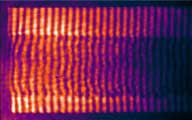
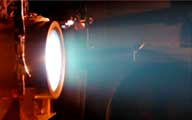
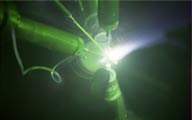
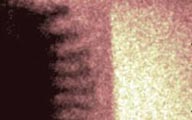
Images to Excite and Inspire!
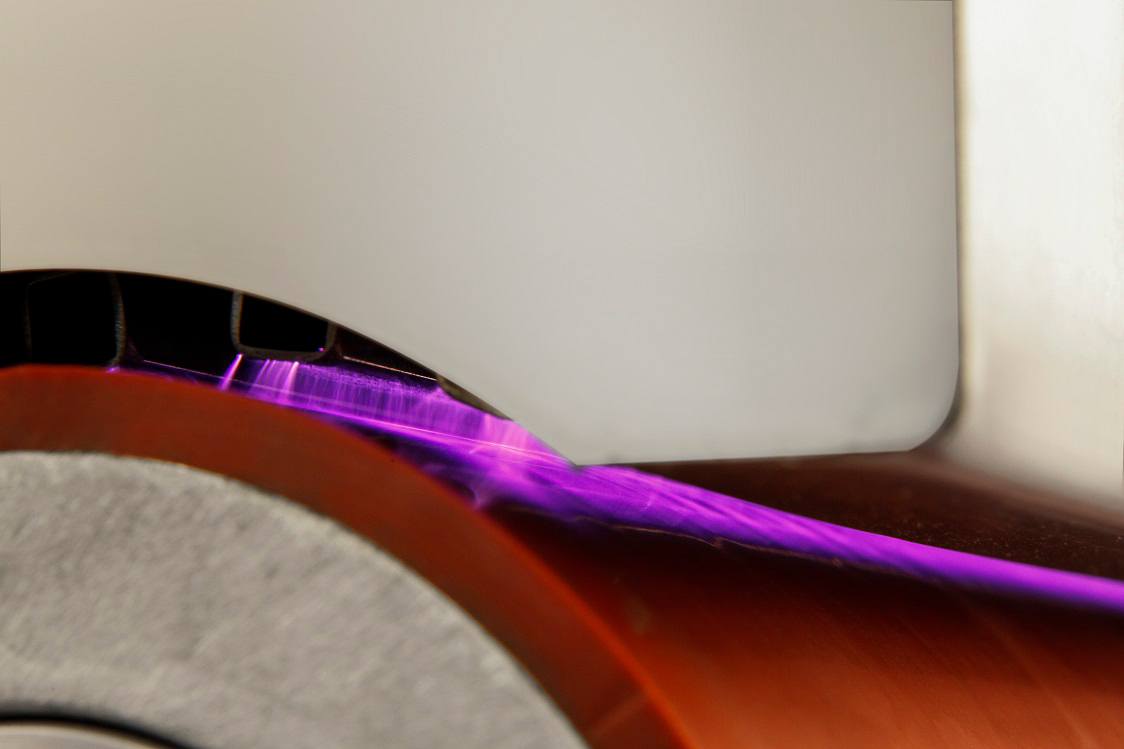
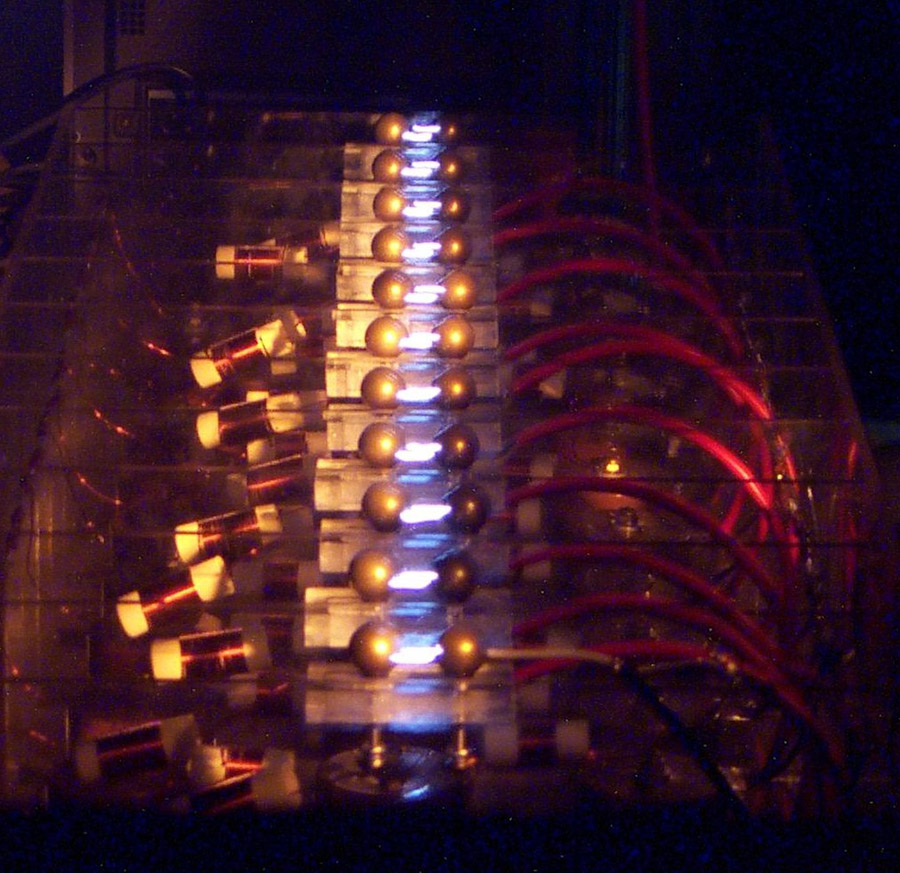
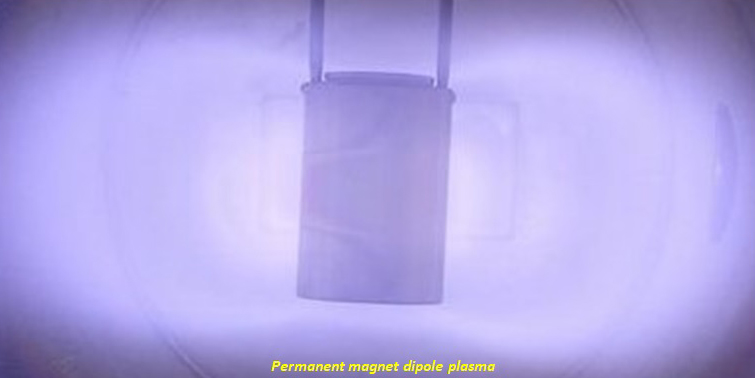
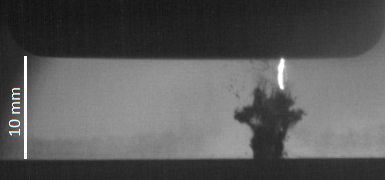
Thank you for submitting your images, some of which are shown here. Those images already submitted will appear in later Newsletters. Please do send your images (with a short description or source) to iltpc-central@umich.edu.
(Click the images to enlarge.)

General Interest Announcements
The ILTPC is maintaining a list of LTP conferences (view-only). With many meetings being canceled and rescheduled, we thought this would be useful for minimizing conflicts and planning future trips. The data may not be 100% accurate, so please let us know of changes in conference scheduling.
Contact: ILTPC iltpc-central@umich.edu
Meetings and Online Seminars
Online LTP Seminar
Because of the pandemic caused by COVID-19, most scientific conferences, workshops, and symposia have been cancelled or postponed. The unfortunate consequence of this is that the low temperature plasma (LTP) community, like many other research communities, is now isolated without the opportunity to meet, network, and learn what’s new in our field. To remedy this situation, a bi-weekly online seminar is being organized. This seminar series is meant to fill the gap left open by the lack of scientific meetings and conferences. The seminar organizing committee has selected several outstanding speakers to participate by giving a 25-30 minutes lecture followed by 10-15 minutes discussion.
Current program of Online LTP Seminars. Presentations begin at 9 am EST on Tuesdays. The seminar is delivered via Zoom and is free to access from anywhere in the world.
For more information, and to request the Zoom link and password, please contact: Prof. Mounir Laroussi Old Dominion University mlarouss@odu.edu
International Conference on the Physics of Low Temperature Plasmas (Kazan, Russia)
Postponed to November 9-13, 2020; online conference
Due to the COVID-19 pandemic, the PLTP-2020 Organizing Committee has decided to postpone the dates of the International Conference on the Physics of Low Temperature Plasmas (PLTP 2020) which was to be held June 1-5, 2020 in Kazan (Russia).
The conference will now be held in Kazan on November 9 - 13, 2020. Submitted abstracts and paid registration fees will apply to the new dates of the conference. At the same time, we inform you that at the end of August 2020 an online conference will be held. Details will be announced and information will be presented on the conference website.
Deadline for abstracts, registration and registration fees is extended to July 30, 2020.
Contact:
- Organizing Committee pltp2020@gmail.com
- Conference Organizer plasma2020@mkcongress.ru
- Prof. Yu. Lebedev lebedev@ips.ac.ru
Community Initiatives and Special Issues
Special Topic Issue of Journal of Applied Physics on the Fundamentals and Applications of Atmospheric Pressure Plasmas
Atmospheric pressure plasmas are formed in open atmosphere and result in high reactivity due to formation of multiple excited and ionized species. These plasmas play an important role in many applications, including plasma medicine, agriculture, plasma processing, catalysis, and aerospace engineering. This Special Topic Issue, which brings together researchers in all areas of experimental, computational, and theoretical study of atmospheric plasmas, provides a collection of exciting new research on the fundamental aspects of atmospheric pressure plasmas and their applications. Submission deadline is October 15, 2020.
Guest Editors:
- Prof. Michael Keidar George Washington University keidar@email.gwu.edu
- Prof. Klaus-Dieter Weltmann INP Greifswald weltmann@inp-greifswald.de
- Prof. Sergey Macheret Purdue University macheret@purdue.edu)
Special Issue of Applied Sciences on Nitrogen Fixation by Plasma: Towards Electrification of Chemical Industry
The many examples of plasma discharges for N2 fixation range from the early Birkeland-Eyde process with oxygen to the recent advances of plasma with nitrogen and hydrogen or even simply water. In the past 5 years, the research has grown beyond the plasma field specifically, e.g., combining plasma with catalytic or electrochemical processes. This vast interest in plasma-assisted and plasma-driven methods is due to the unique properties of plasmas, such as generation of excited or atomic species, facilitating N2 fixation. Most importantly, plasmas often operate under benign conditions, thus complying with the desired electrification of chemical industry, leading towards a more sustainable future. In this context, we are honoured to announce this Special Issue of Applied Sciences. We cordially invite authors to contribute their works, which we expect to be focused on all aspects of N2 fixation by plasma, including experimental and computational research in areas of plasma chemistry, physics, catalysis, diagnostics, etc.
A few of the papers in the special issue will be published without any open-access fees. These will be selected by the editors and the guest editor.
Contact: Dr. Yury Gorbanev Guest Editor University of Antwerp Yury.Gorbanev@uantwerpen.be
EPJ D Topical Issue: Low Temperature Plasmas: Processes, Diagnostics and Applications
Submissions are invited for a Topical Issue of EPJD on Low Temperature Plasmas: Processes, Diagnostics and Applications. The aim of this Topical issue is to present new results in the field of low temperature plasmas with a view towards new applications and development of advanced technologies. Original research papers, review articles, and white paper/roadmap articles are all welcomed, covering the physics and chemistry of ionized gases, plasma surface interactions, and plasmas for existing and emerging technology.
Topics to be covered include but are not limited to:
- Plasma diagnostics and characterization
- Modeling and diagnostics of plasmas during nanomaterial growth or etching
- Plasmas formed at the surface of or inside liquids
- New vacuum or atmospheric plasma sources for plasma nanotechnology
- New plasma processes for green nanofabrication, sustainable lifecycles of natural resources
- Applications of plasma nanotechnology in the life sciences and chemistry
- Fabrication of inorganic or organic nanomaterials and nanostructures
- Applications of plasma nanotechnology in photonics and plasmonics, and energy harvesting devices
- Plasmas at new spatiotemporal scales: micro and nanoplasmas, nanosecond pulsing
Submission deadline: September 30, 2020.
Guest Editors:
- Prof. Eva Kovacevic CNRS/Université d'Orléans, France eva.kovacevic@univ-orleans.fr
- Prof. Steven Shannon North Carolina State University, USA scshannon@ncsu.edu
- Prof. Jeon G. Han Sungkyunkwan University, Republic of Korea hanjg5445@gmail.com
Research Breakthroughs
Molecular Plasma Group SA – Antimicrobial and Antiviral Coatings
Created as a spin-off from VITO (Belgium) and the Luxembourg Institute of Science and Technology (LIST) to commercialize a unique nanocoating technology using cold atmospheric plasma, Molecular Plasma Group SA was established in 2016. We are providing industrial plasma equipment dedicated to surface modification and functionalization. One of the main focus areas for MPG is the biomedical industry. In the present context of the COVID-19 pandemic, use of face masks has been recommended by the Centers for Disease Control and Prevention to reduce the chain of transmission. Low temperature plasmas can be used to decontaminate sensitive materials. As most of the currently available PPE are designed to be disposed after use, their materials are cheap and fragile (e.g. polymers, paper). The use of cold plasmas for decontamination – inactivation or “killing” of micro-organisms – is a well-documented topic, and still is under investigation in view of mask decontamination.
But there is much more that cold plasmas can enable. Addition of anti-viral and antibacterial agents, in the form of ultra-thin (tens of nm) coatings, would significantly enhance safety, performance, and possibly lifetime of protective masks and other PPE. This way, PPE would not act only as a simple “barrier” to pathogen agents. The additional nanometric functional layer would offer active disinfection properties while being harmless to the user. Our technology is based on optimized and highly-controlled cold atmospheric plasmas that permit synergistic combination with chemicals or other additives. It is a single step, fast processes for surface treatment of sensitive materials, among which are paper, plastics and textiles.
More information:
Contact: Dr. Bernard Nisol Molecular Plasma Group Bernard.Nisol@molecularplasmagroup.com
New Resources
Special Issue of PCPP: 24th International Symposium on Plasma Chemistry
Plasma Chemistry and Plasma Processing has just published a Special Issue containing papers by Plenary and Topical Invited Lecturers at the 24th International Symposium on Plasma Chemistry (ISPC 24), 9-14 June 2019, Naples, Italy. The guest editor for the special issue is Prof. Matteo Gherardi (matteo.gherardi4@unibo.it) of University of Bologna. The papers in the issue can be accessed for free until July 11, 2020.
Contact: Dr. Tony Murphy Editor in Chief, PCPP CSIRO Australia Tony.Murphy@csiro.au
Career Opportunities
Position in Computational Science and/or Plasma Physics, Plasma Matters B.V., The Netherlands
Plasma Matters B.V. is a software company that specializes in plasma modeling and numerical simulation, offering scientific expertise and the industry-strength plasma simulation software PLASIMO to academic and industrial customers. We help our customers to optimize their plasma production processes, solve short-term issues, and develop innovative plasma technologies. We are now looking for an expert in computational science or/and plasma physics to strengthen our team of experts and to help Plasma Matters B.V. keep growing. Candidate should have at least a Master's degree in computational plasma physics or related field; a PhD is preferred.
Job description:
- Setup numerical models for various types of plasmas and applications
- Validate modeling results against available experimental data or literature
- Initiate and formulate theoretical test cases
- Conduct research for solving customers’ issues or answer technology questions
- Share your knowledge effectively with the team
- Report findings into reports and presentations, and technical research papers
Personal skills:
- Excellent verbal and written communication skills
- Enthusiastic and passionate about plasma physics and computational methods
- Great analytical and problem-solving, research, and data gathering skills
- Critical and pragmatic attitude, able to work in a multidisciplinary team
To submit your application, please send an email with your CV to careers@plasma-matters.nl.
Contact: Dr. Diana Mihailova CEO Plasma Matters B.V. diana@plasma-matters.nl
PhD position in Modelling Non-equilibrium Plasmas for Nitrogen Fixation, Maastricht University
This 4-year PhD project aims at accurate modelling of non-equilibrium plasmas for nitrogen fixation. The work is performed in synergy with experiments at DIFFER and Maastricht University on the conversion of molecules into valuable chemicals like fertilizers by means of plasmas. The conventional way to produce fertilizers is the so called Haber-Bosch process, where nitrogen and hydrogen are converted into ammonia, which in turn is converted into nitrates. A novel and hopefully cheaper approach to produce nitrates would be to use a plasma, but there are a lot of fundamental questions to be answered first. The PhD student will develop a model to simulate this process and to identify the key mechanisms that drive it.
Responsibilities and tasks:
- Develop a code for the accurate calculation of non-equilibrium population of vibrationally excited state
- Coupling with a model for the plasma neutral/charged particles kinetics
- Validation and characterization with respect to numerical and physical parameters
We seek motivated and highly talented candidates with a Master's degree (or an equivalent diploma giving access to doctoral studies) in Physics or Chemistry. The applicant should have:
- General knowledge of low temperature plasmas and of computational modelling
- Good programming skills (e.g. Fortran, C, C++) are essential
- Good communication skills in English (both written and spoken)
Contact:
- Dr. Paola Diomede DIFFER and Maastricht University p.diomede@differ.nl
- Further information
Collaborative Opportunities
Laser and Plasma Research Institute (LAPRI) at Shahid Beheshti University
The Laser and Plasma Research Institute (LAPRI) at Shahid Beheshti University is a facility addressing a wide variety of plasma technologies in Iran. The LAPRI also is active in the Iranian Plasma Society. The head of the research group is Prof. Babak Shokri who has overseen development of several plasma devices.
- PlasmaTEX Machine: In this project, atmospheric pressure plasma (Dielectric Barrier Discharge) is being developed with a width of 2.2 m for treatment textiles to increase the wet ability and dying process.
- CoronaPRINT: Investigations to increase the treatment speed of any kind of films and polymers. Corona first cleans the surface and secondly etches the surface to increase the effective surface and finally produce wet able bound on the surface. The goal is to reach 500 m/min.
- PlasmaMED: Investigations on experimental work on plasma application on cancer, wound healing, and skin rejuvenation.
Collaborations are invited.
Contact: Prof. Mohammad Reza Khani Laser-Plasma Research Institute Shahid Beheshti University m_khani@sbu.ac.ir
Disclaimer
The content of this Newsletter comes from the contributions of members of the ILTPC. The Newsletter editors are attempting to provide as inclusive a communication as possible. However, inclusion of items in the Newsletter should not be interpreted as an endorsement by the editors nor as advertisement for commercial purposes. The content of this newsletter should also not be interpreted as an endorsement by our sponsors – the US National Science Foundation, the US Department of Energy, or the University of Michigan. The Newsletter editors may do some light editing of the original submissions, to maintain a consistent tone and style.